
How Much Does a Gravel Driveway Cost in Minnesota?
National cost guides put a new gravel driveway at about $1 to $10 per square foot installed. For a driveway 10 feet wide and 100 feet long, that is roughly $1,000 to $10,000. The guides disagree by a wide margin, so treat them as a starting point.
These are market numbers, not our price list. Wolf Creek Dirt Works does driveway and road building for homes and acreage around Sturgeon Lake. In this part of Minnesota, a long rural driveway or a county access permit can move the number. So can the spring weight limits on gravel roads.
What does a gravel driveway cost by size?
One national guide prices gravel driveways at $4 to $10 per square foot for labor and materials. A 2024 guide puts them at $1 to $3. The table shows both.
| Driveway size | Square feet | At $1 to $3 per sq ft | At $4 to $10 per sq ft |
|---|---|---|---|
| 10 by 50 feet | 500 | $500 to $1,500 | $2,000 to $5,000 |
| 10 by 100 feet | 1,000 | $1,000 to $3,000 | $4,000 to $10,000 |
| 12 by 200 feet | 2,400 | $2,400 to $7,200 | $9,600 to $24,000 |
Width counts as much as length. Where a driveway meets a St. Louis County road, the county wants it at least 20 feet wide.
How much gravel goes into a class 5 base?
National cost guides call for 4 to 12 inches of gravel, laid in layers. One sets the minimum at 5 to 6 inches, and 8 to 12 inches for trucks or RVs.
MnDOT’s aggregate spec labels class 5 as a base gravel. Kanabec County’s driveway standards show class 5 gravel over clean fill at the road entrance. The county wants 3 inches of compacted gravel base on top of the entrance.
One guide figures 2.5 tons of gravel for every 100 square feet at 6 inches deep. That works out to about 30 tons per 100 feet of a 12-foot driveway. Delivered crushed stone runs $30 to $60 a ton in another guide, and crusher run $25 to $50. Other guides range from $10 to $100 a ton.
Why does the base matter in a Minnesota freeze and thaw?
Minnesota’s building code puts all five counties around Sturgeon Lake in its five-foot frost footing zone. A gravel driveway sits on top of that freezing ground.
MnDOT’s research shows roads thaw from the surface down. Water gets trapped in the gravel base because it cannot drain into the frozen ground below. MnDOT figures each spring day does about 5 times the road damage of a summer day.
One national guide says cold regions need deeper gravel bases to prevent frost heave. It prices grading, which sheds water off the driveway, at $1 to $3 per square foot.
What do culverts and drainage add?
Where a driveway crosses a road ditch, the road authority decides if a culvert goes in. One guide prices culverts or drains at $500 to $2,000. A 2024 guide says drainage work such as culverts adds an average of $3,750.
Thomson Township, around Esko, sets culvert minimums by pipe length. Pipes under 30 feet long must be at least 12 inches across, and longer pipes at least 15 inches. In St. Louis County, the owner buys the culvert when the driveway permit calls for one. The county does not sell culverts, but it maintains private driveway culverts afterward.
Digging a culvert trench counts as excavation under Minnesota’s one-call law. A locate ticket goes to Gopher State One Call (811) at least 48 hours ahead. Weekends and holidays do not count.
Do you need an access permit for a new driveway?
On a county road or a state highway, yes. Each road authority sets its own fee and rules.
| Road | Permit | Published cost |
|---|---|---|
| Pine County road | Residential access or entrance permit | $500 |
| Kanabec County highway | Driveway permit | $600 ($100 fee plus a $500 deposit) |
| St. Louis County road | Driveway permit | $600, including a $500 refundable deposit |
In Kanabec County, the applicant has 90 days to finish the work. The deposit comes back after a final inspection, once the seeded slopes grow in.
MnDOT requires an access driveway permit before a driveway connects to a state highway. The property owner applies, and MnDOT has 60 days to approve or deny a complete application. On a township road or a city street, ask the township or the city. Duluth requires an approved application and an excavation permit for a driveway opening in the public right-of-way.
What does a long driveway through the woods add?
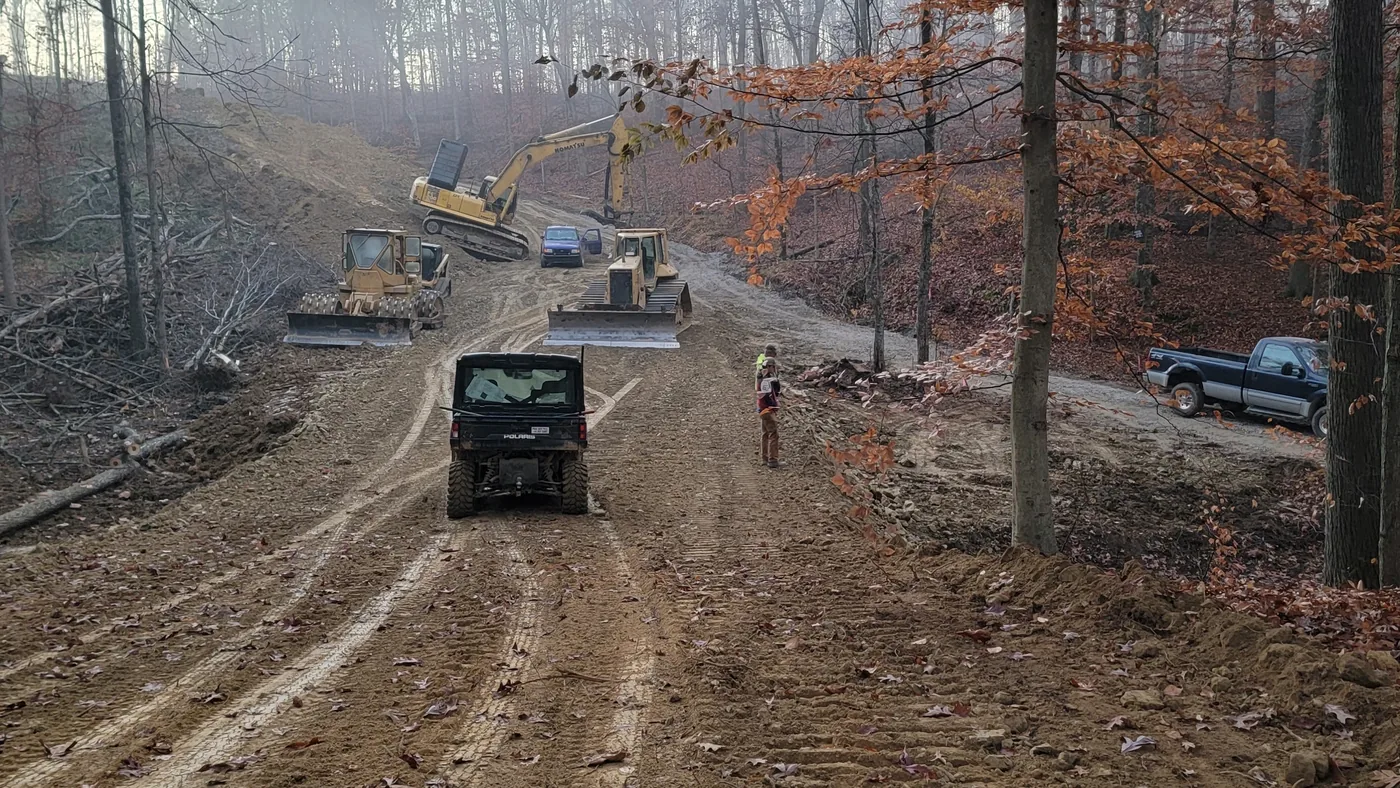
A driveway back to a house site in the trees starts with clearing. One guide lists clearing brush or trees for a driveway at $500 to $2,000. A 2024 guide puts land clearing at $1,300 to $5,200.
Under the roadbed, the stumps and roots come out too. That step is called grubbing. One guide says the soil should be clear of grass and roots before the gravel goes down. Thomson Township’s permit also asks for 15 feet of clear width and 15 feet of clear height.
Wolf Creek does land clearing for driveway routes and can mulch the trees it removes. Our guide to land clearing costs per acre covers bigger clearing jobs.
Length adds gravel by the ton. At about 30 tons per 100 feet, a 500-foot driveway takes about 150 tons. At $30 to $60 a ton delivered, that is $4,500 to $9,000 in crushed stone alone. One guide prices hauling at $100 to $500 per load, and distance sets the price.
How do spring road limits affect a driveway job?
Between dates MnDOT sets each spring, state law caps any single axle at five tons on unpaved roads. Road authorities can post other limits too. In 2026, MnDOT’s two northern zones ran from mid-March to mid-May. Kanabec County’s 2026 gravel road limits came off May 8.
About 307 of Pine County’s roughly 690 highway miles are gravel. Lighter loads mean more trips, so ask how spring timing affects your haul.
When does a gravel driveway need a rebuild instead of more gravel?
Topping up is normal upkeep. One guide puts regrading and fresh gravel at $100 to $400 a year. It says a well-kept gravel driveway lasts 10 to 20 years.
The same guide calls for full replacement when ruts run deep or the sub-base fails. It prices a replacement at $1,500 to $6,000. That means pulling the old gravel and rebuilding the base under new rock.
If the same ruts come back every spring, look under the gravel before adding rock. MnDOT’s maintenance manual says road failures often start in the soil under the gravel base. In St. Louis County, maintaining the surface of a driveway needs no county permit, but widening it does.
How do you get a real number for your driveway?
The ranges above are a starting point. A real number comes from a look at your route and the road it meets. On a new home site, the driveway rough-in is part of site preparation for a new home. If you plan to pave later, we build the base and grade it close to finish for the paving company.
Wolf Creek looks at the job and puts a free estimate in writing. See how our driveway and road building works, or call or text (218) 820-9653.