
Pond Digging
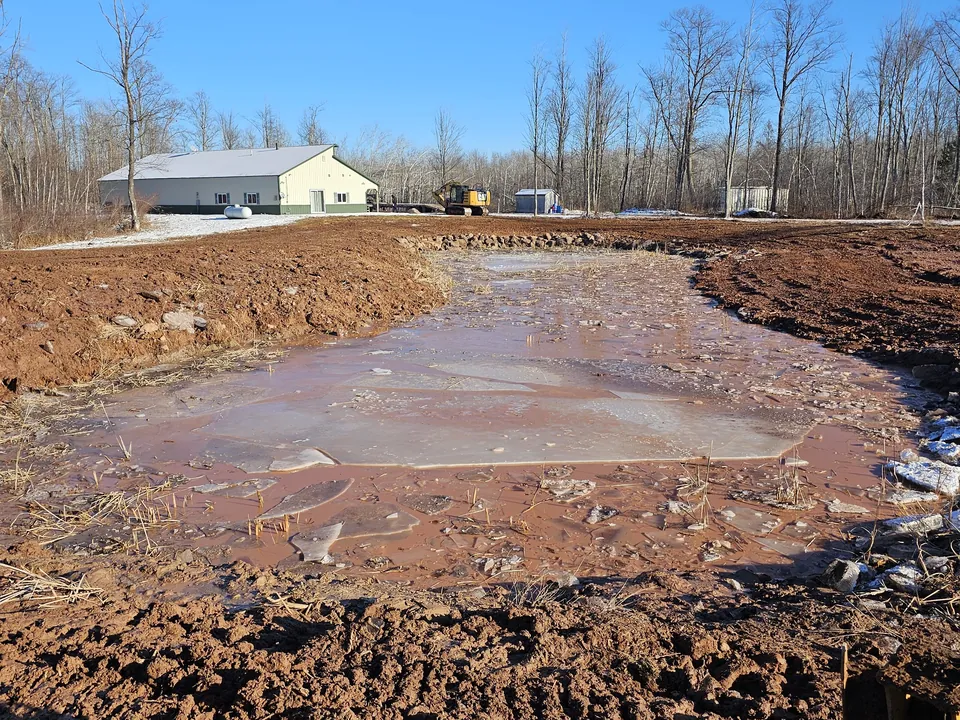
We dig new wildlife ponds and fish ponds on rural land and acreage, big and small. The topsoil gets saved, and the spoil gets spread on site or hauled off.
Learn More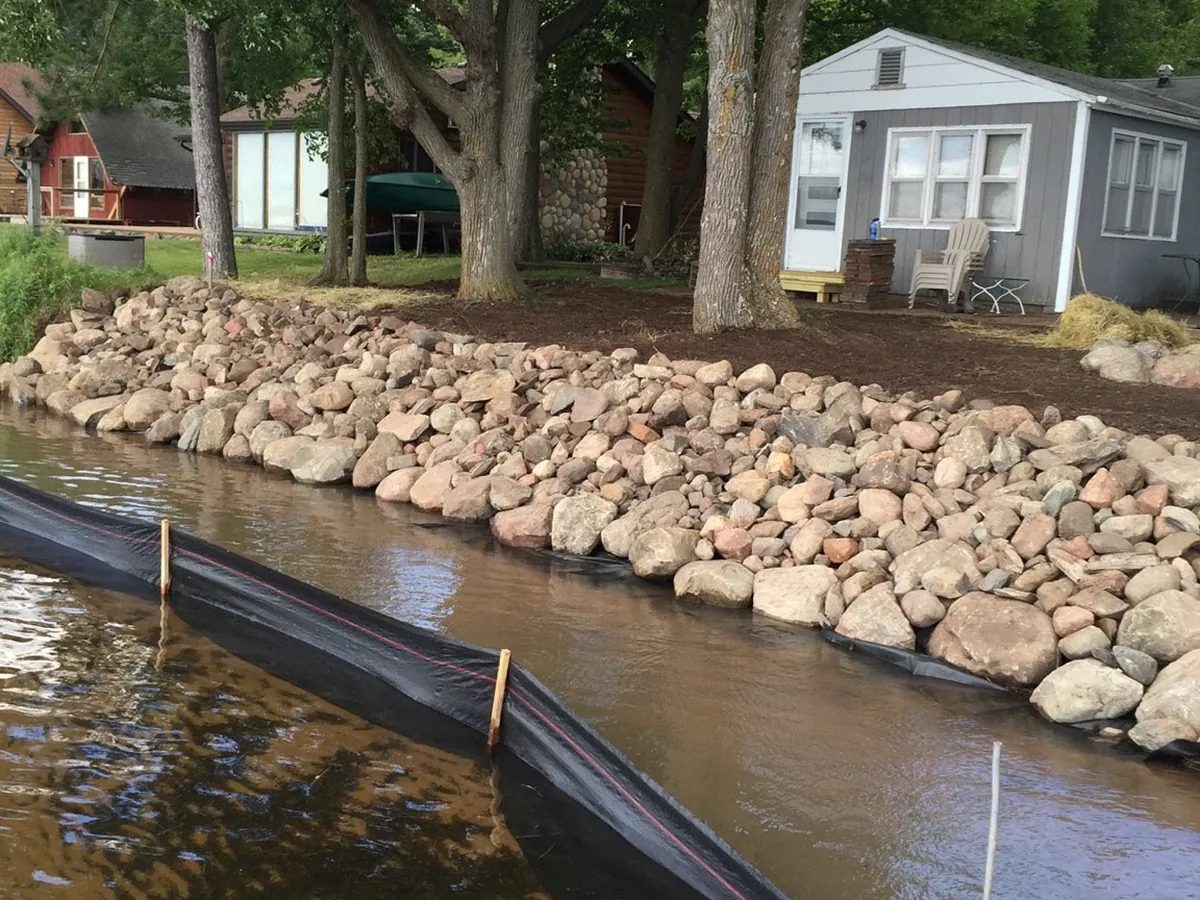
Shoreline riprap is a layer of natural rock placed on an eroding lake bank to stop the erosion. When a lake bank keeps caving in and washing away, riprap is one way to hold it. Wolf Creek Dirt Works places riprap on lake lots around Sturgeon Lake and across the surrounding counties.
We also handle site preparation for new homes on lake lots and acreage, and pond digging for new wildlife and fish ponds. Your DNR area hydrologist and local zoning office answer whether a shoreline needs riprap and whether a permit applies. Call or text (218) 820-9653, and we look at the shore and put a free estimate in writing.
Tell us about the job and where the property is. We look at it and put your free estimate in writing.
Riprap is for a shoreline that is already eroding. The DNR allows it only where there is a demonstrated need to stop existing erosion or restore an eroded shoreline. It is not for landscaping or for replacing a stable, naturally vegetated shoreline. Pine County also allows riprap only where there is a demonstrated need to stop erosion.
To the DNR, even one row of stacked boulders is a retaining wall, not riprap, and needs a DNR permit. Our shoreline work is riprap: natural rock laid on a sloped bank over a filter.
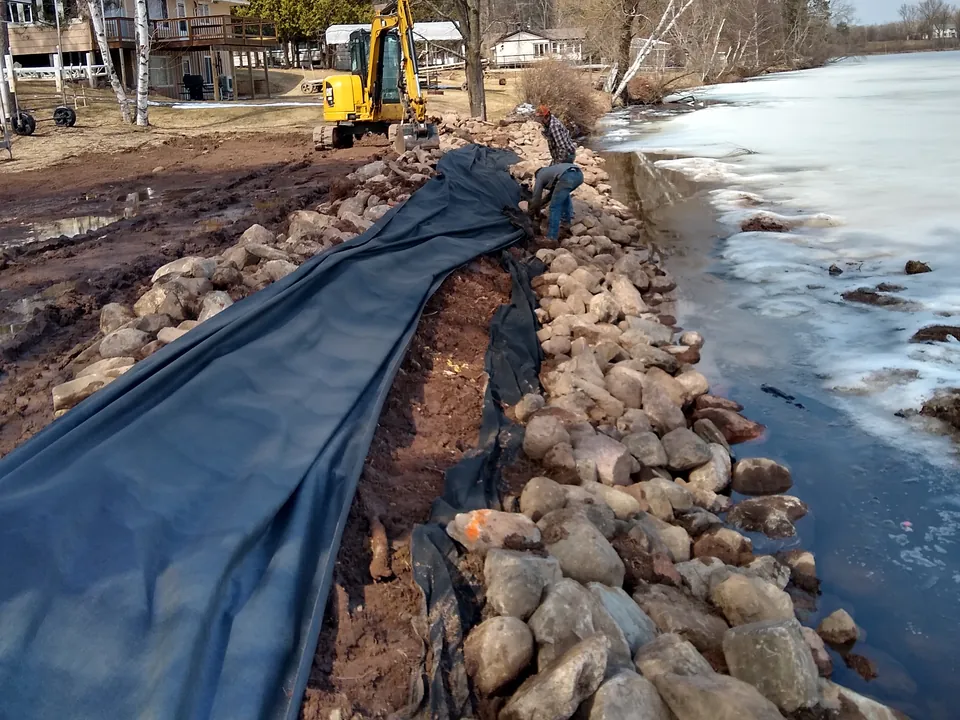
Riprap installation starts with the eroded bank, which we shape before any rock goes on. A filter goes down next, and the DNR calls for crushed rock, gravel or filter fabric under the rock. Natural rock then goes on top of the filter.
Riprap that goes in without a DNR permit has to meet the DNR's conditions. Measured on top of the rocks, the finished slope can be no steeper than 3 to 1. That means three feet across for every foot up. The rock follows the natural shoreline and reaches no more than 6 feet waterward of the ordinary high water level.
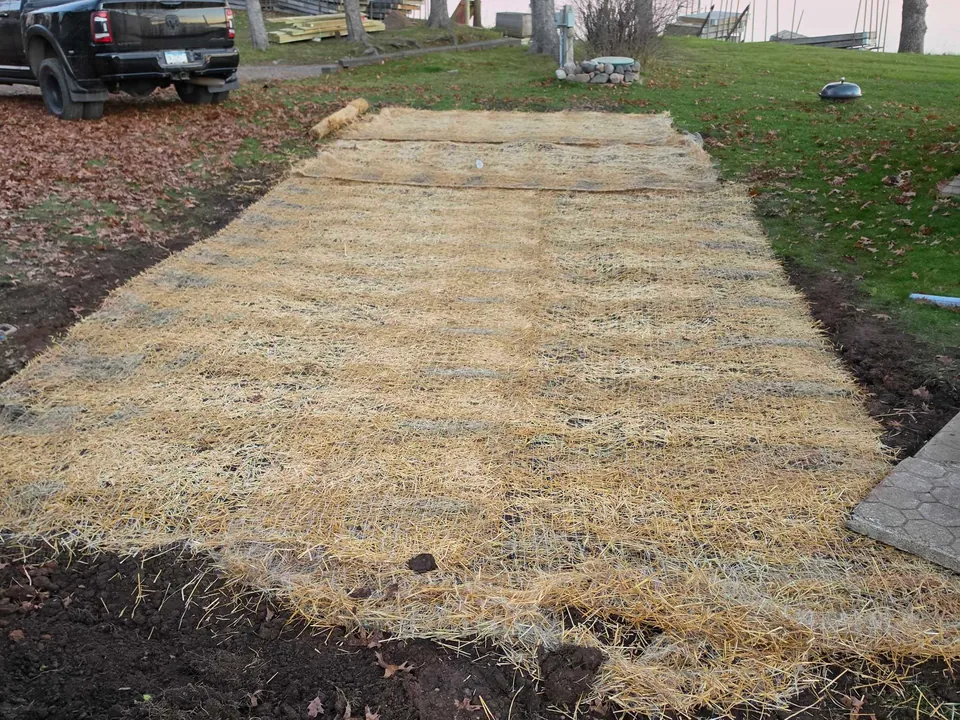
Silt fence or a silt curtain stays up while the ground is open. Carlton County's erosion control sheet says to trench silt fence in about 6 inches. For shoreline work below the waterline, Minnesota's stormwater manual accepts a floating silt curtain as the silt barrier. Then the disturbed ground above the rock gets seed and a straw erosion control blanket.
The DNR has jurisdiction for riprap below the ordinary high water level, and local government has it above. In state law, that level is the highest water line held long enough to leave its mark on the land. It is commonly where the plants change from mostly water plants to mostly land plants. Most projects below it on public waters need a Public Waters Work Permit.
Riprap without a permit can cover no more than 200 feet of shoreline on public water lakes and wetlands. It must not cover emergent water plants unless a DNR aquatic plant management permit allows it. The no-permit route is closed at a posted fish spawning area, a designated trout stream and the Lake Superior shore. The DNR requires agents and contractors to submit a Landowner Statement and Contractor Responsibility form, permit or not.
Above the ordinary high water level, shoreland rules hold riprap within 10 feet landward and 3 feet above that level. Pine County regulates riprap above that level when more than 10 yards of material is used. Shoreland in Arna, Pokegama and Windemere townships and in the Pine County cities sits outside the county's shoreland ordinance. Sturgeon Lake, the lake the city is named for, sits in Windemere Township.
Call or text for a written quote. We work about 50 miles around Sturgeon Lake across Pine, Carlton, Kanabec, Aitkin and St. Louis Counties.
(218) 820-9653From the first call or text to the finished work, here is how it goes.
Call or text (218) 820-9653 and tell us about the job. Let us know where the land is and what you plan to build.
We come out and look over the land and the work you want done. Wet ground and thick woods both change the plan, so we see them first.
We put a free estimate in writing for the work. You read it over and decide when you are ready.
Before any digging, a locate ticket goes in through Gopher State One Call (811). Septic work waits for the designer's plan and the permit.
We do the work with heavy equipment and clean up the debris at the end. Then the site is ready for the next trade, like the builder or the paving company.
Common questions about shoreline riprap around Sturgeon Lake and the surrounding counties. If yours is not here, call or text and ask.
We dig new wildlife ponds and fish ponds on rural land and acreage, big and small. The topsoil gets saved, and the spoil gets spread on site or hauled off.
Learn More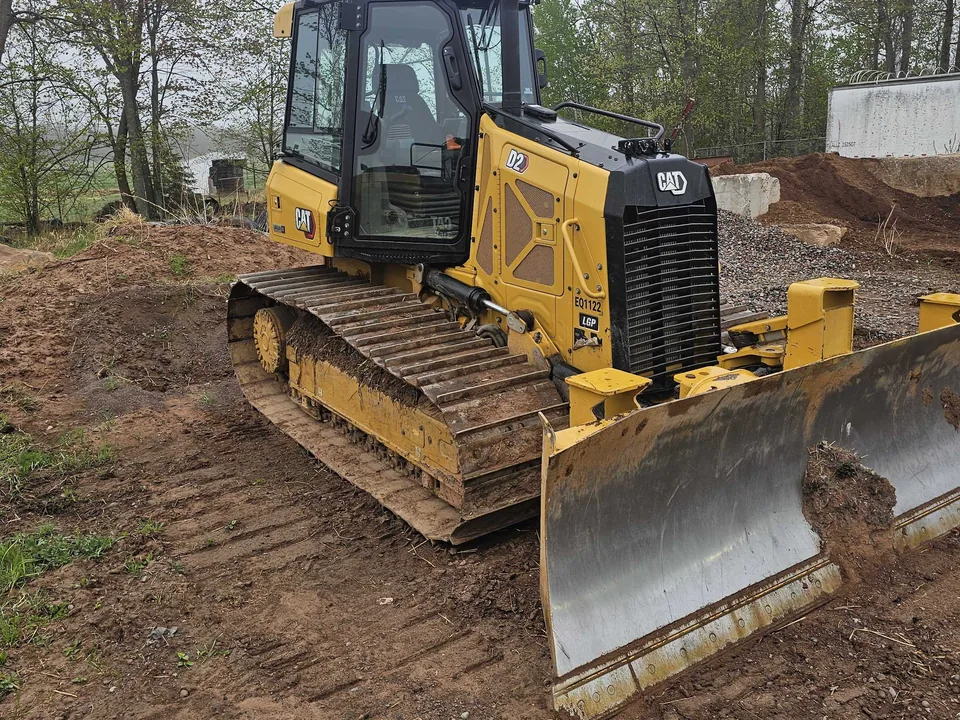
We get a bare lot ready to build on, with the basement dug and the house pad graded. We also install sewer and water lines and dig ponds.
Learn More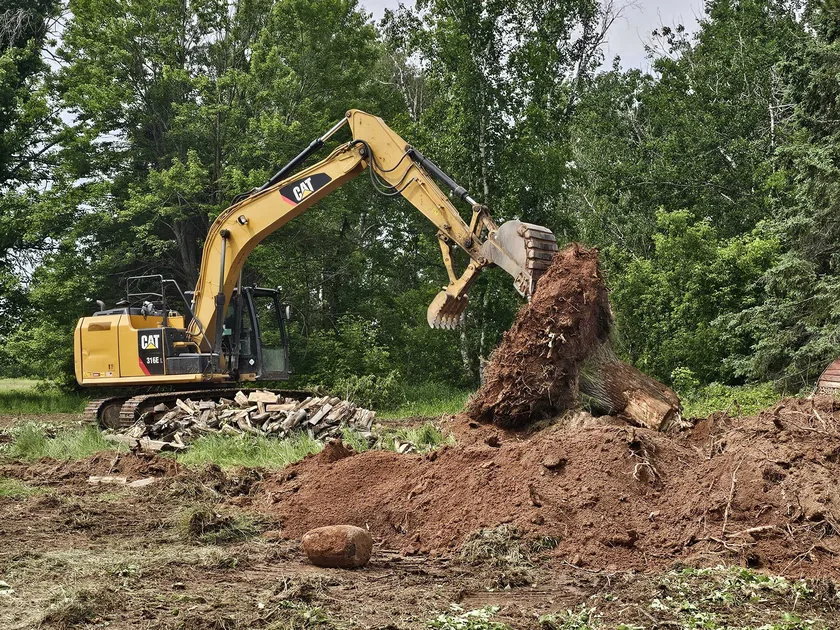
We clear trees, brush, stumps and rocks from building sites and acreage. We can also mulch the trees we remove.
Learn MoreSite prep, land clearing, septic systems, demolition and driveways all come from us. You deal with one company for the dirt work.
We look at the land and the job before we price it. Then you get a free estimate in writing.
Our service area reaches about 50 miles around Sturgeon Lake. It covers Pine, Carlton, Kanabec, Aitkin and St. Louis Counties.
Tell us where the land is and what you want done on it. Call or text (218) 820-9653 or send the form, and we set up a time to look at the job.
Tell us about the job and where the property is. We look at it and put your free estimate in writing.